Before you send
-
Start with the use
Say where the insulation sits and what the wearer or the product actually does. A commute layer, a packed alpine piece, and a lined handwear shell do not ask the same question of a fill. Describe that setting in ordinary language before you reach for a performance adjective.
-
Add the material
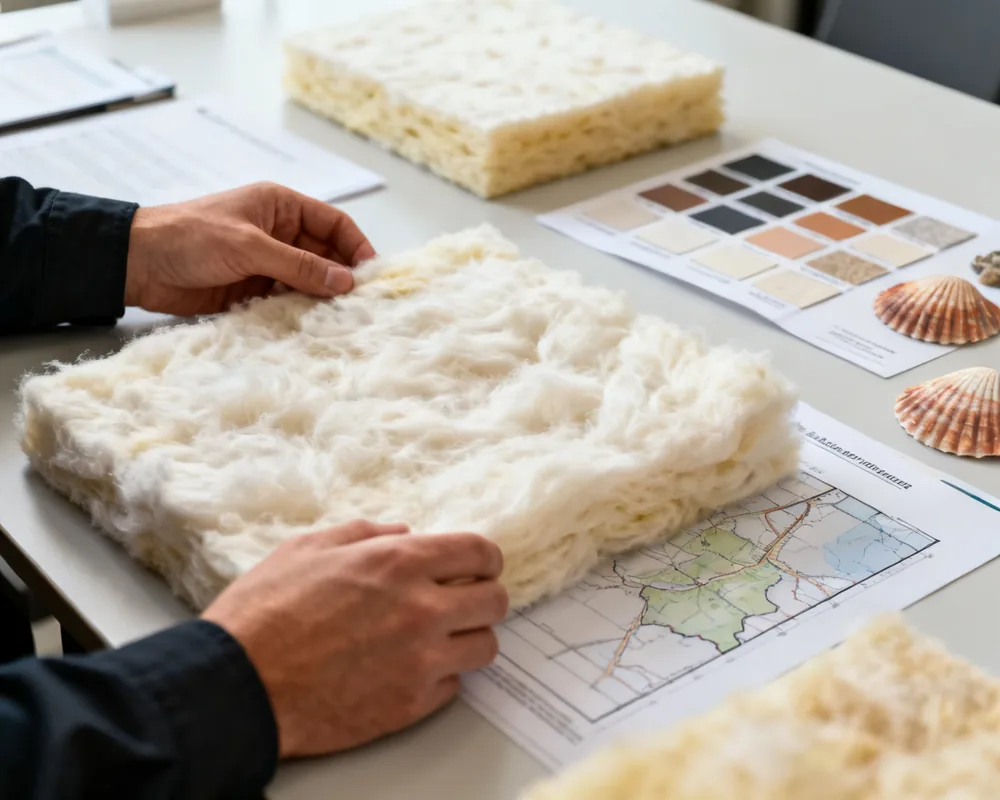
Name the insulation reference you have, or describe the piece in front of you: loft, any scrim, and whether a facing is already attached. A physical sample, when you have one, clarifies the request more than a product-line nickname. Do not send a street address for us; none is published on this profile, and a specimen can be discussed without inventing an office.
-
Explain the next decision
Tell us what you still need to compare. It might be hand against a dated specimen, a wet-state method you already know, or the supply format that would fit your cutting plan. Quantity and destination can travel in the same note as commercial context. They do not, by themselves, confirm availability or a delivery window.
Phone, mailbox, and opening hours are not listed because they are not established for this desk. Use the form for the enquiry. If you are matching a document, add the holder and the edition year printed on that record rather than assuming a badge on this page covers your construction.
Useful numbers in the message are identifiers, not results this site is asserting. A 200 g/m² target, a usable width in centimetres, or a fiber composition that sums to 100 percent by mass tells a reviewer what to look up. Denier or dtex should keep its own unit. Leave hydrostatic head, water vapor transmission, air permeability, tear strength, and dimensional stability blank unless you already have a method name, a specimen state, and a report date to put beside them.